Restored multi-level lakeside deck in Houston TX with deep red stain, built-in benches, and decorative post caps along the water.

Full deck restoration on a lakeside property in Houston, TX 77065: remove and replace rotted pressure-treated framing caused by foundation settling and ground moisture, rebuild with 3½" deck screws (no nails), deep-sand all decking and trim, then apply four coats of solid red stain for a uniform, weather-resistant finish.
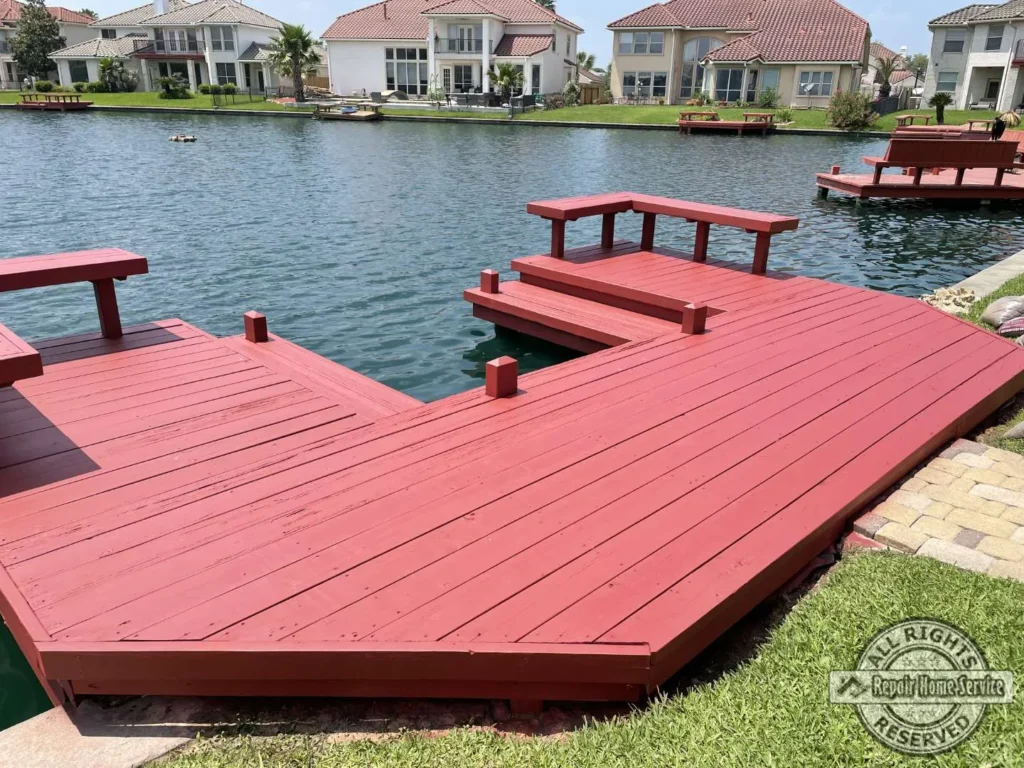
Restored multi-level lakeside deck in Houston TX with deep red stain, built-in benches, and decorative post caps along the water.
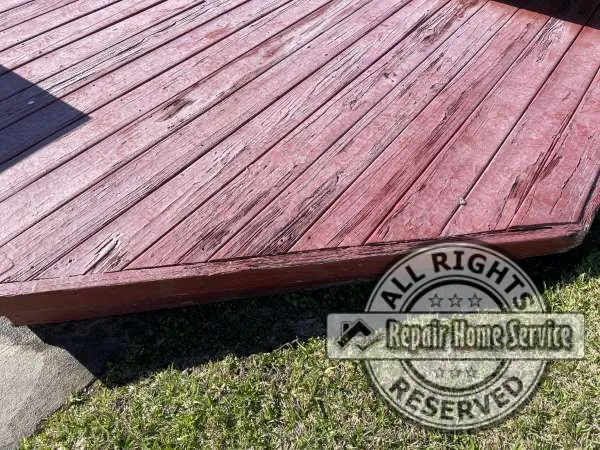
Before deck restoration in Houston TX showing diagonal decking with peeling faded red stain and weather-checked pressure-treated boards.
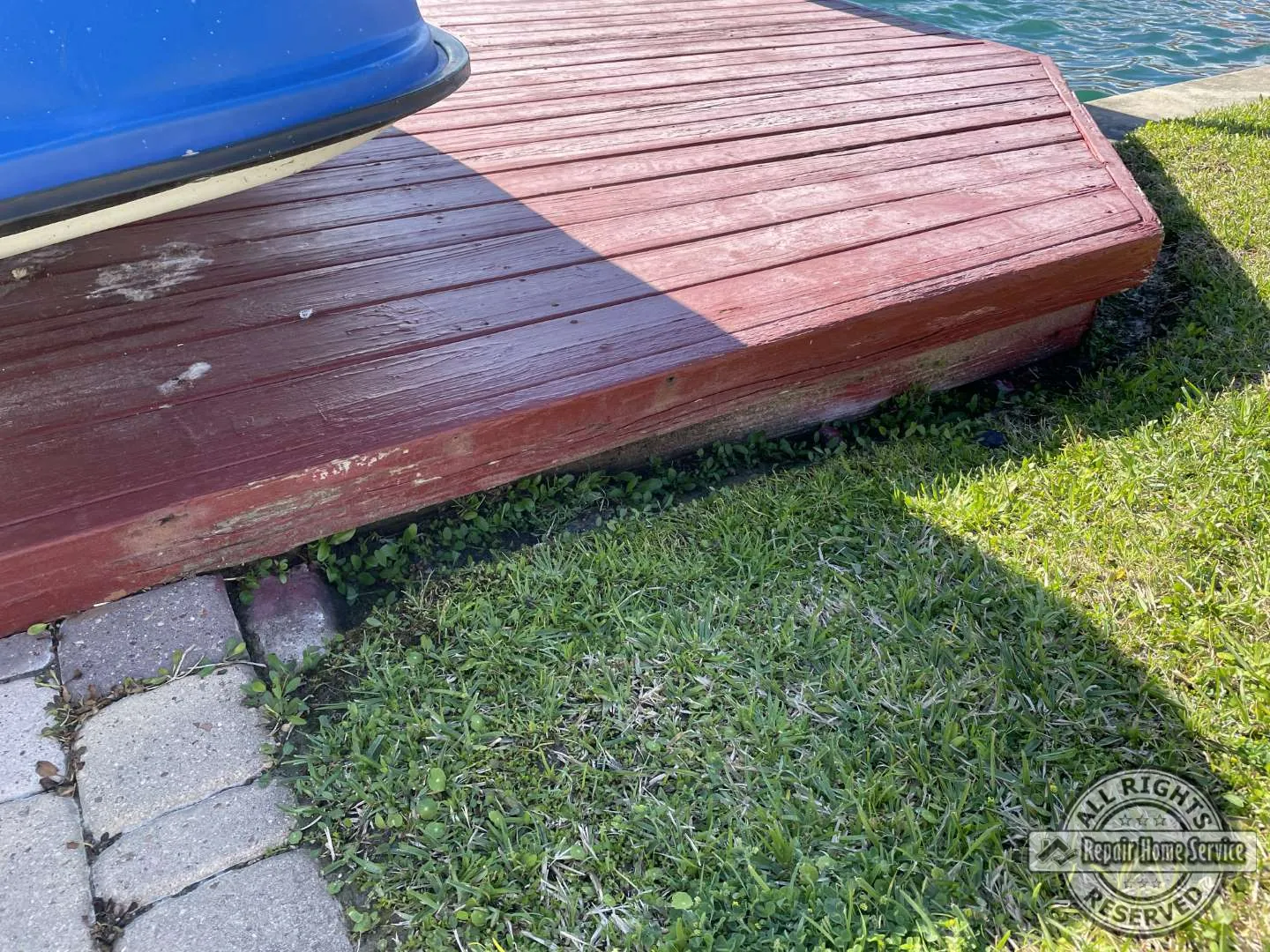
Weathered waterfront deck boards in Houston TX 77065 with chipped red stain, stone pavers, grass, and a small boat on the dock before refinishing.
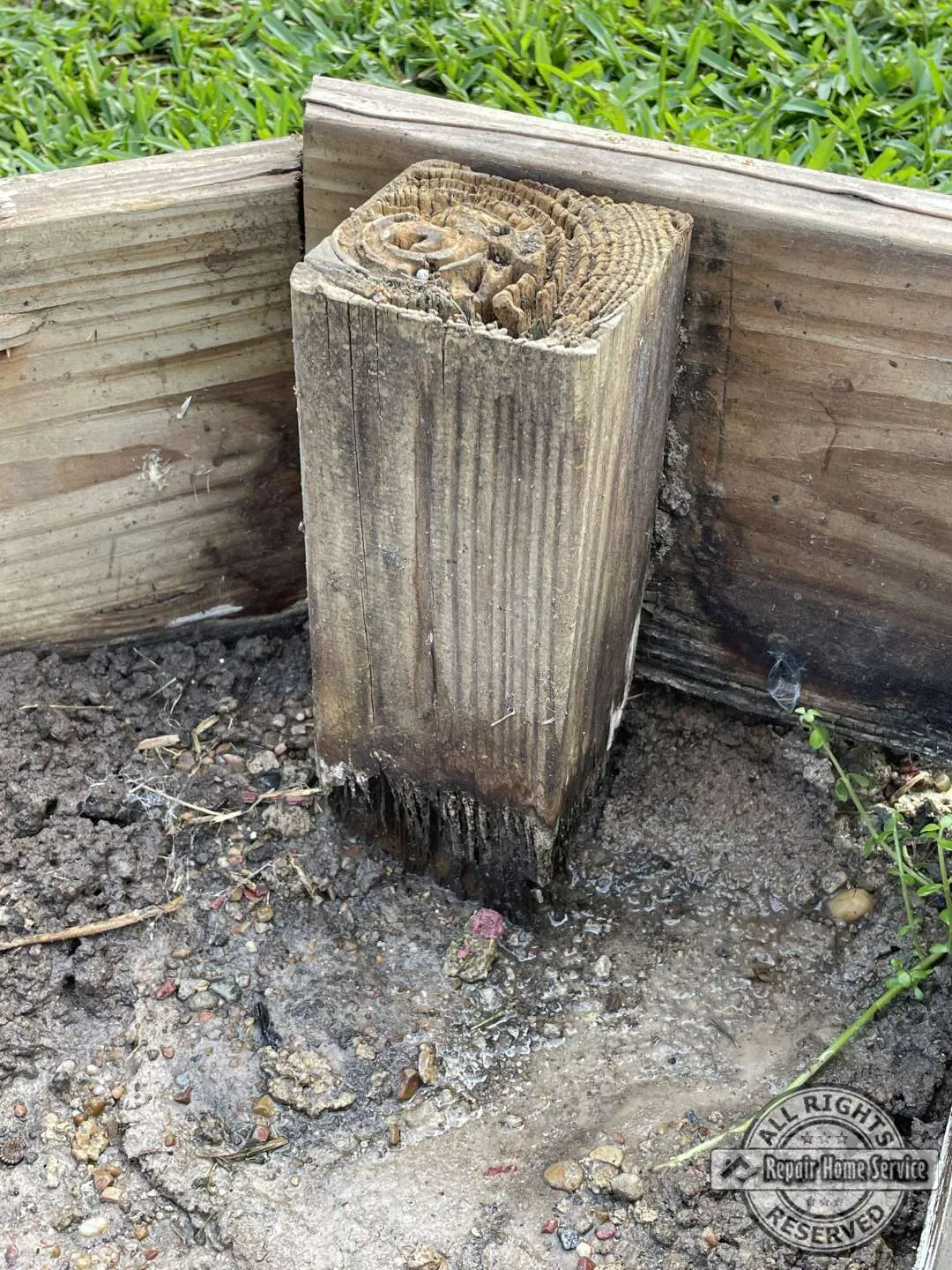
Close-up of rotted wooden deck support post at wet ground level in Houston TX before structural replacement.
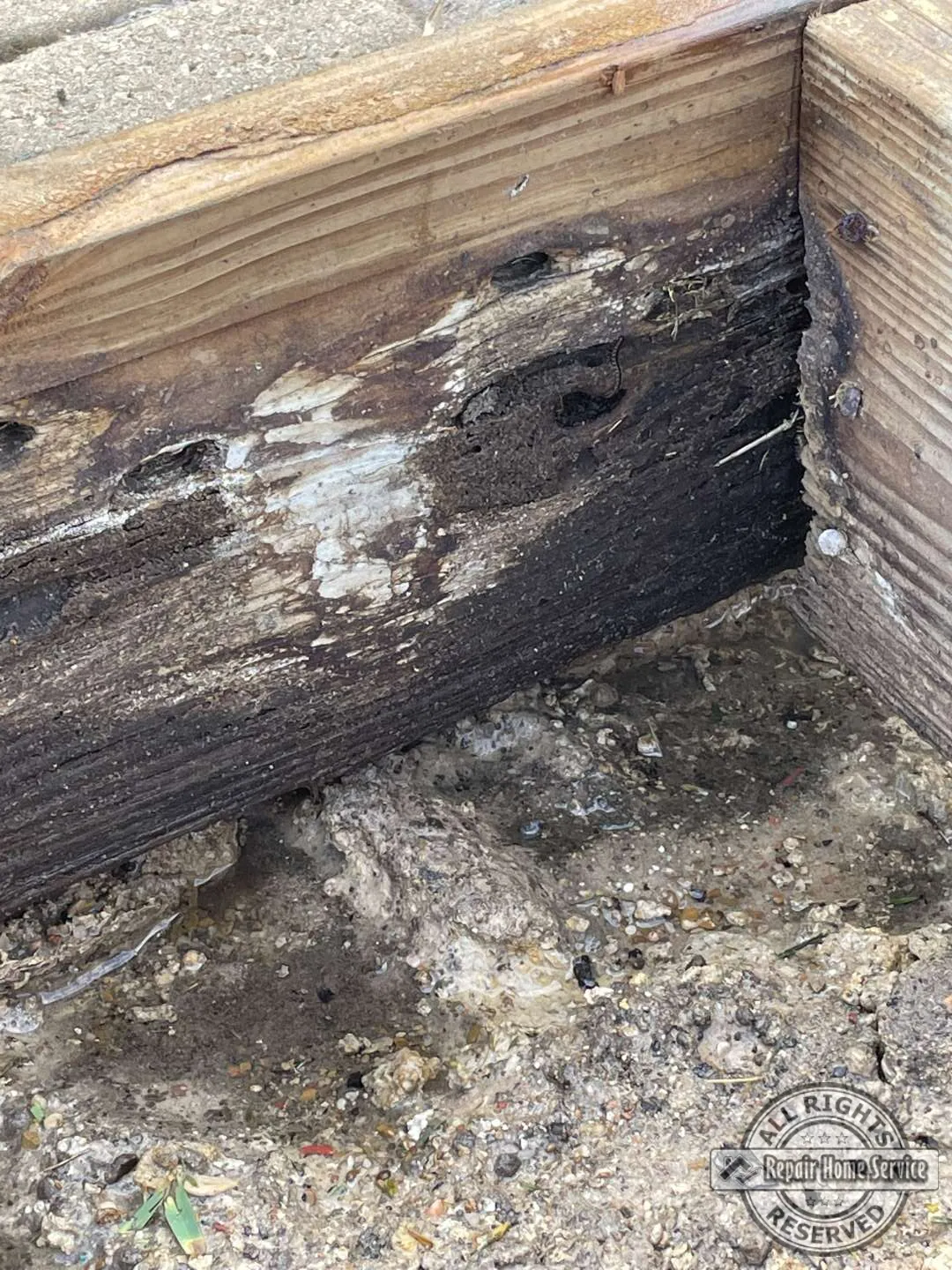
Severely rotted deck rim joist corner with crumbling wood and damp soil underneath a Houston TX lakeside deck before repai
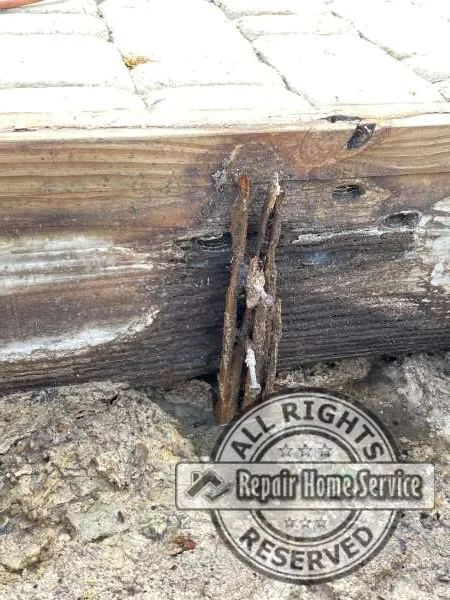
Rotted pressure-treated deck beam with split fibrous decay where framing met wet ground in Houston TX before restoration.
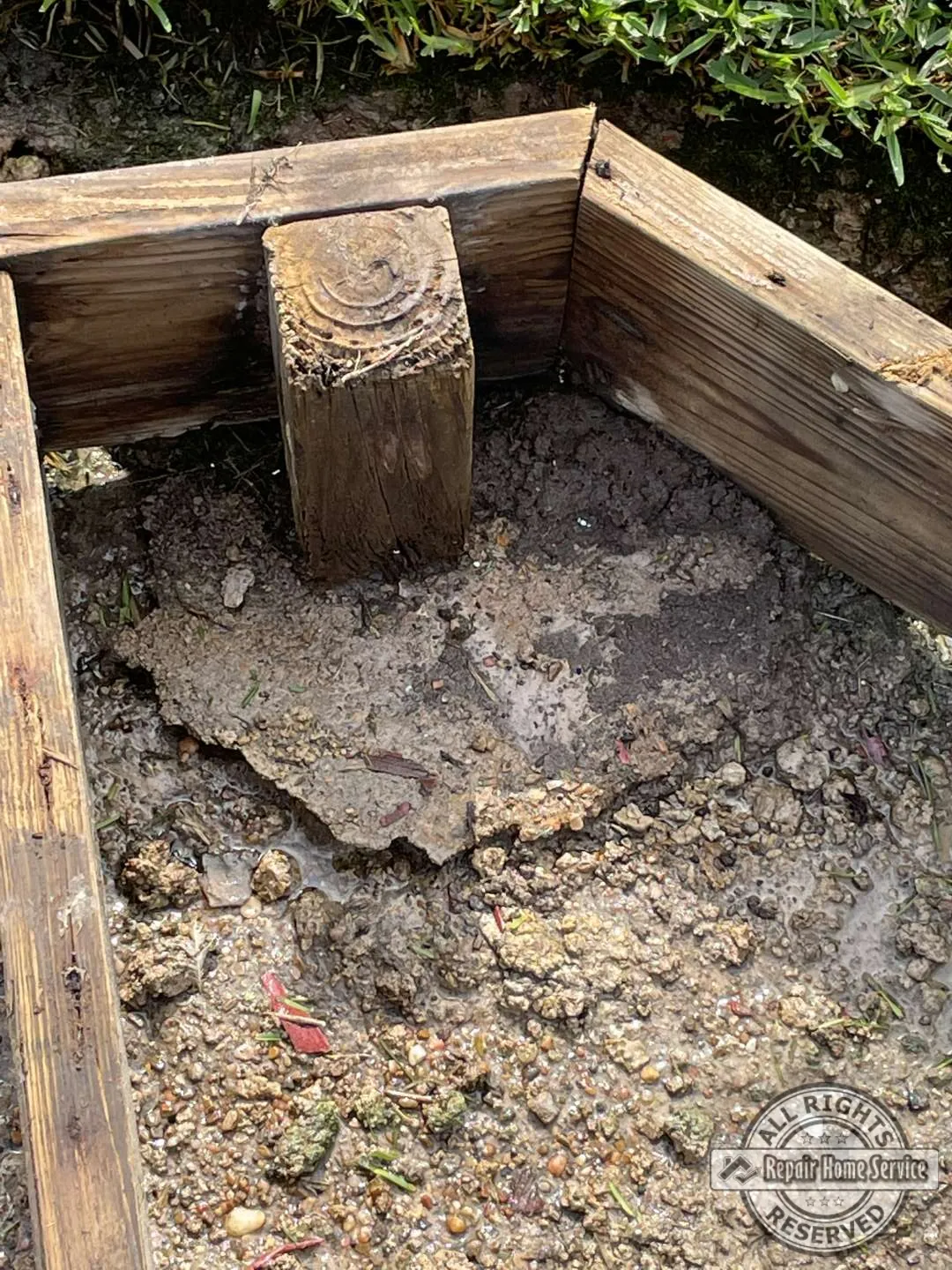
Deck support post set in muddy saturated soil showing foundation settling and moisture damage in Houston TX before rebuild.
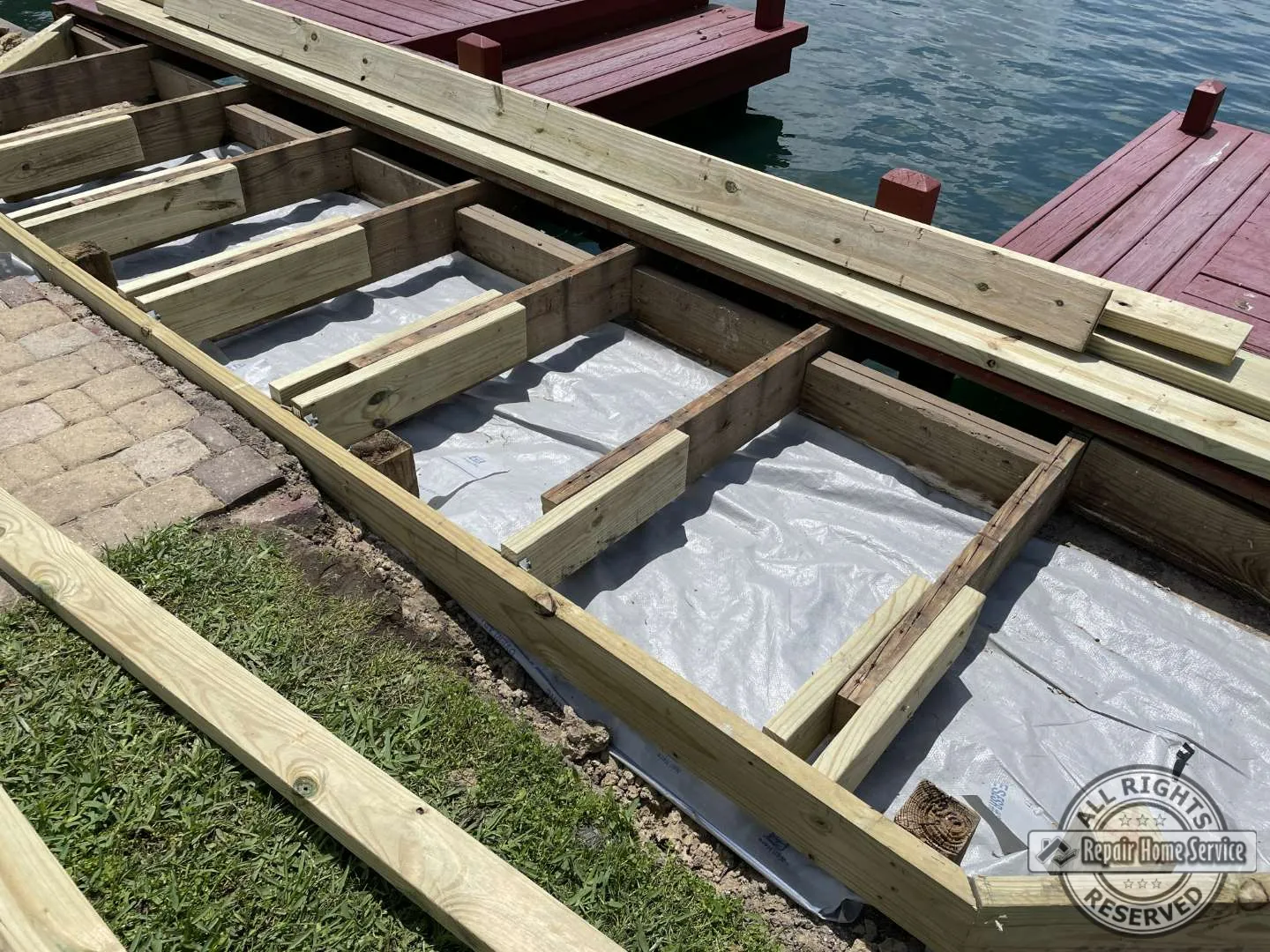
Deck framing repair in progress in Houston TX with new pressure-treated joists, landscape fabric, and lakefront stone paver edge.
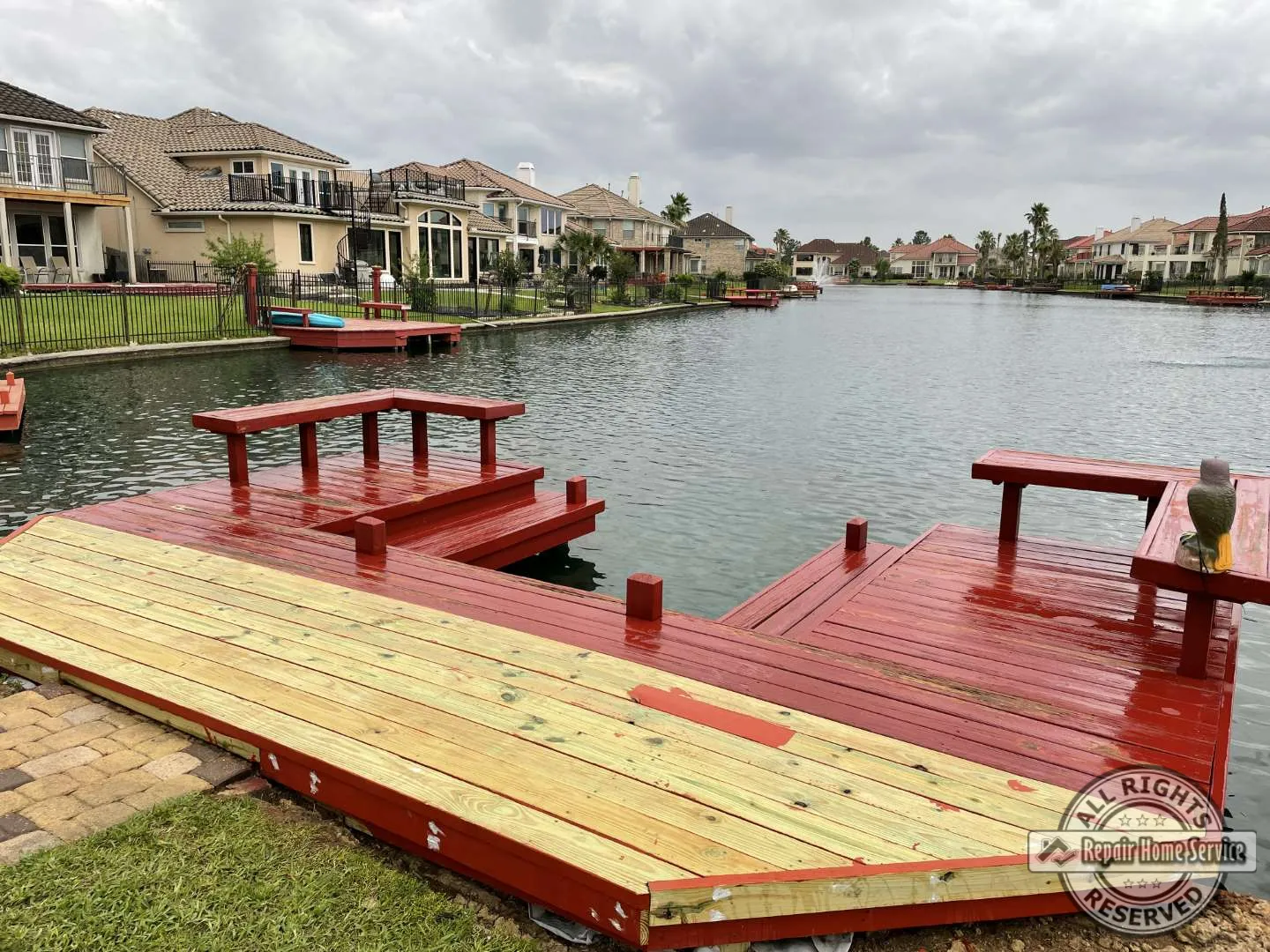
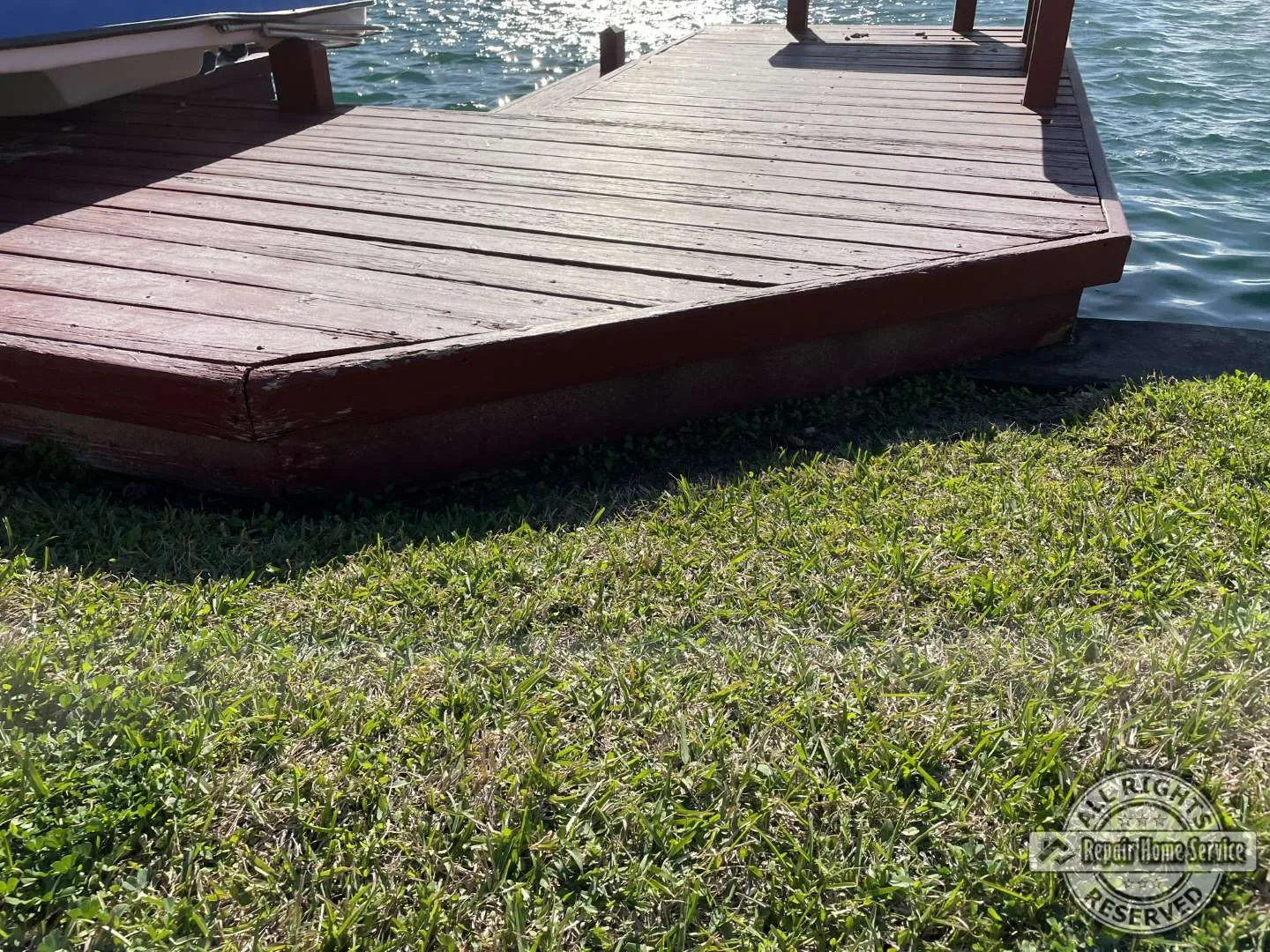
Mid-restoration lakeside deck in Houston TX with new pressure-treated decking beside finished red-stained platforms and built-in benches.
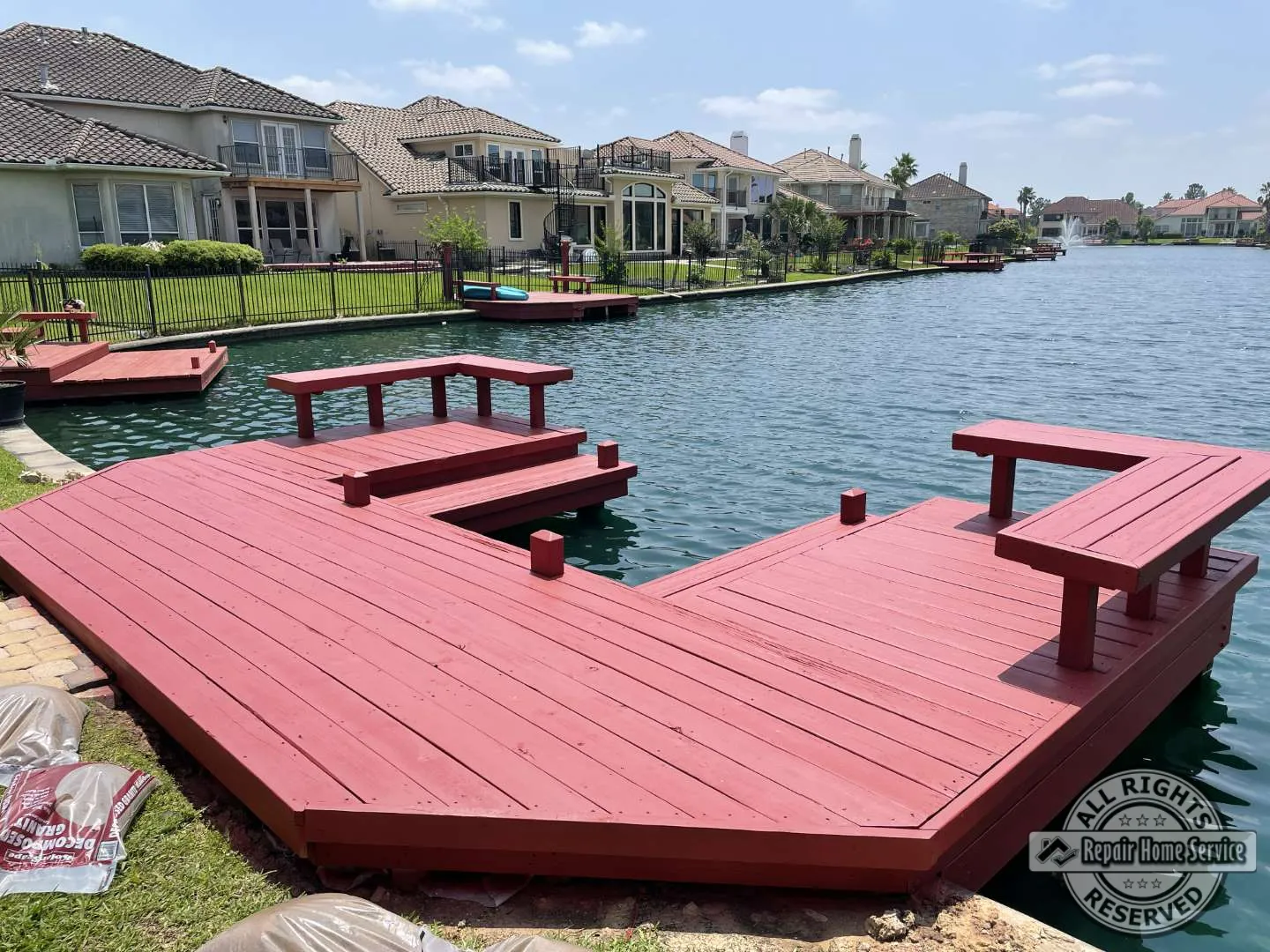
Completed red-stained waterfront deck restoration in Houston TX 77065 with multi-level platforms, benches, and lake views.
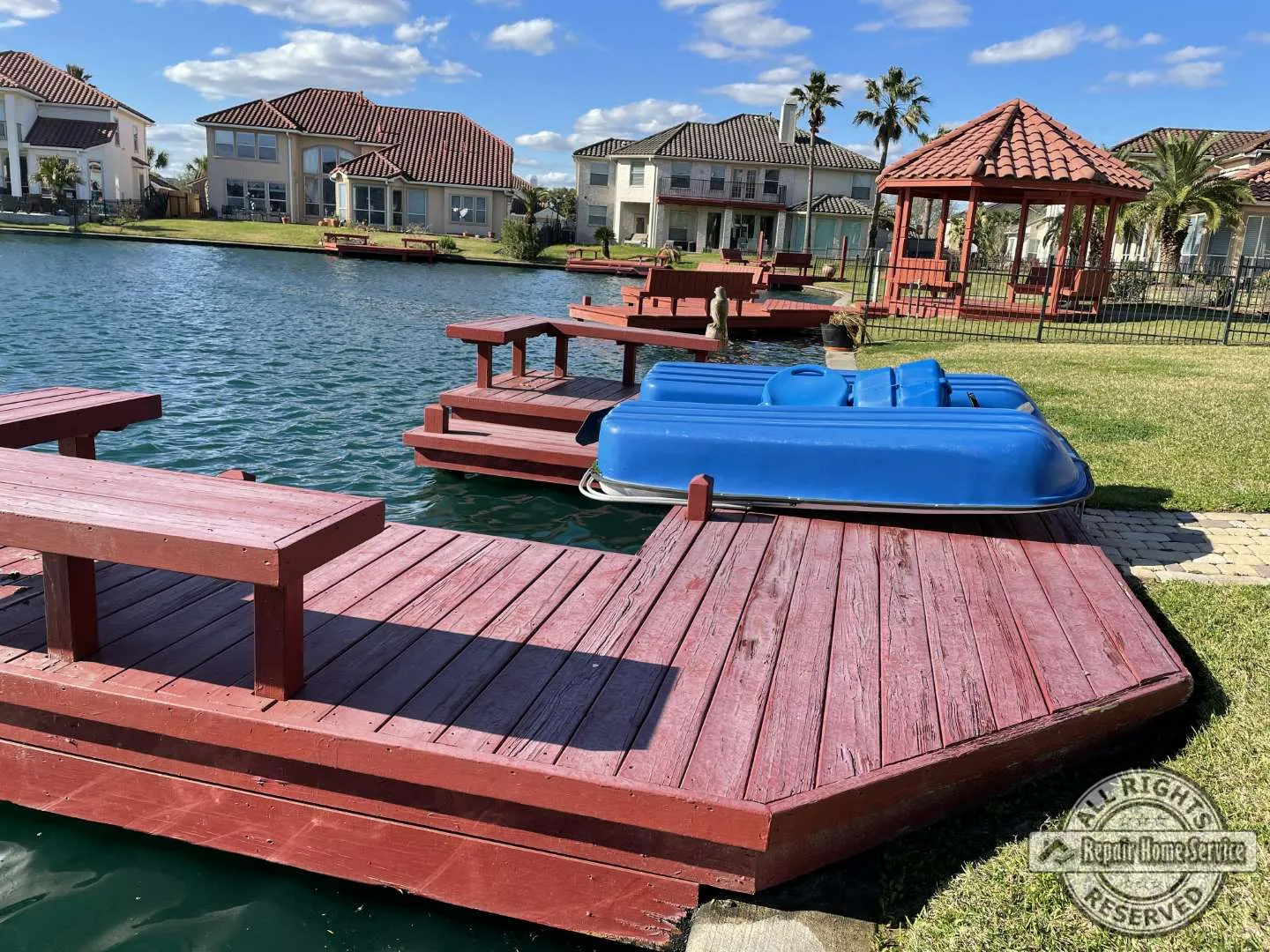
Finished Houston TX deck and dock with four-coat red stain, built-in seating, paddle boat, and suburban homes across the lake.
This waterfront deck in Houston’s 77065 area had seen years of sun, rain, and lake humidity. The old red stain was peeling and faded, the boards were weather-checked, and several structural members had rotted where the frame sat too low and held moisture from wet soil and a sinking foundation.
We started by addressing what you cannot see in a fresh coat of stain—failed posts, rim joists, and corners that were soft, split, and pulling apart. Rotted pressure-treated lumber was removed and replaced, framing was sistered and rebuilt where needed, and new decking was installed with precision mitered cuts and 3½" deck screws for a cleaner, stronger build than nail-only construction.
Once the structure was sound, the entire deck was deep-sanded to open the grain and remove the old failing finish. Four coats of solid red stain went on for even color and better protection on a deck that sits over the water. The finished multi-level layout—with built-in benches, stepped platforms down toward the lake, and decorative post caps—reads as one cohesive red-stained deck again instead of a patchwork of worn boards and raw repairs.
Homeowners get a safer walk surface, a deck that drains and wears better with screw fastening, and a finish that holds up in a tough Houston outdoor environment without starting over on the whole structure.
We put off this deck for too long—the stain was a mess and a few spots felt soft when you walked near the water. Robert’s crew didn’t just slap stain on it. They showed us the rot at the posts and where the frame had sunk into wet dirt, replaced the bad wood, and screwed everything down properly. The deep sand made a huge difference; no more rough splinters, and the red color actually matches all the way across the benches and steps. It’s solid again, and we’re back out on the lake side every weekend.
Cheryl S.